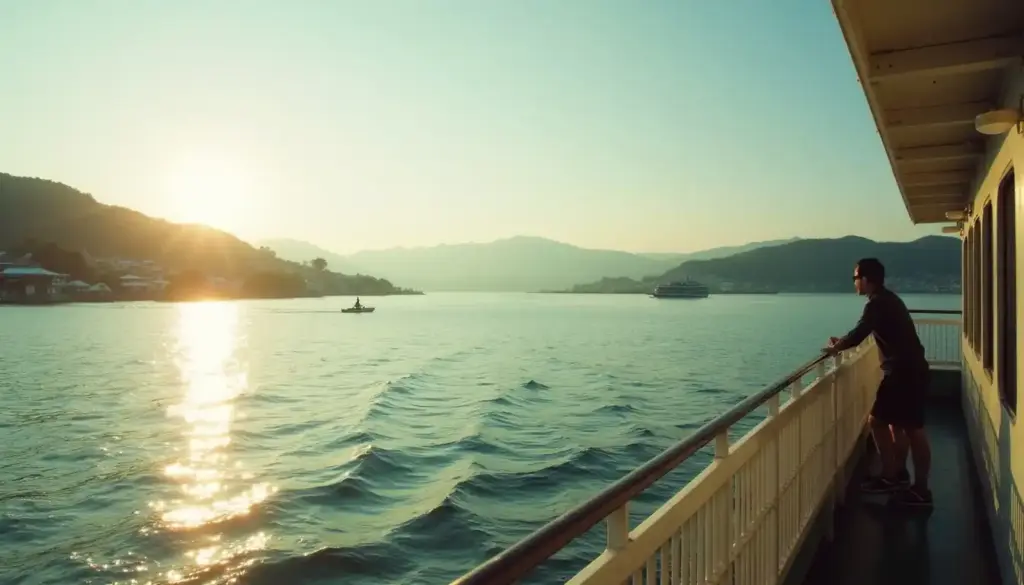
In six days, my wife and I are leaving Tokyo. Not for another neighbourhood, not for a bigger apartment, we’re moving 900 kilometres west to Etajima, a small island in Hiroshima. It feels equal parts terrifying and exhilarating, and we’ve had months to get used to the idea. Honestly, we still haven’t.
We’ve spent that time looking at places, weighing up the good areas and the not-so-good ones, and now we’re jumping in. There’s no more research to do. Just a plane at Haneda and whatever comes next.
Why We’re Actually Leaving Tokyo
Tokyo wore us down. That’s the honest version. What was once exciting about living in one of the world’s biggest cities has slowly become exhausting. The noise, the traffic, the sheer density of people pressing in on every side, it adds up in ways you don’t notice until you can’t un-notice them.
The ambulances are what broke me. Day and night, sirens cutting through everything, a constant reminder that this is a city that truly never sleeps. You stop hearing them as individual events and start hearing them as a single unending sound. That’s when you know.
I want to be clear: we’re not running from Tokyo because we hate it. We’re leaving because we want something it can’t give us.
What Island Life in Etajima Looks Like
I’m dreaming of quieter, cleaner days. Waking up to silence instead of traffic. Riding my bicycle around the island with the wind in my face and no particular destination in mind. Paddle boarding and canoeing on the Seto Inland Sea, that calm, inviting water. I can almost taste the local oysters, fresh from the sea with just a squeeze of lemon. I want to breathe air that hasn’t been through a thousand other sets of lungs first. I want to find scenic views and hidden corners that feel like they’re just ours.
Whether any of that matches the reality is the thing we’re about to find out.
The Problem With Moving 900 Kilometres
Tokyo to Etajima is roughly 900 kilometres. Not insurmountable, but far enough that we can’t pop over for a weekend to test the waters. And we’ve learned the hard way that looking at pictures online just doesn’t cut it. A photograph can make anything look appealing. It can’t tell you about the neighbourhood, the noise levels, the quality of light, or how it feels to walk through that front door. We need to spend real time there before committing to anything. So the plan is a rental first. A sensible way to test the water without diving in headfirst. While we’re there, we’ll hunt for something to buy. Ideally somewhere that doesn’t need renovation work, though we’re realistic about what’s actually available.
Kominka, Akiya, or a Post-1981 House?
This is where it gets complicated. The choices are varied, and each comes with its own set of headaches. Kominka, traditional old Japanese homes, are lovely. Character, history, craftsmanship. But homes of that age inevitably come with issues: flooring that needs replacing, outdated pipework, electrical systems that may not meet modern standards, walls that need attention, damp, and a general lack of insulation. Then there’s the roof, which likely needs work, and the near-certainty that the kitchen and bathroom need replacing, along with the sanitary facilities. A kominka is a labour of love, and we’re not sure we have the energy for that kind of project.
Akiya, abandoned houses, are another option. With almost 10 million of them in Japan, there’s plenty to choose from, and the range in value is enormous. Some look like incredible bargains. But a cheap house isn’t cheap if it costs a fortune to make it habitable, and we need to assess the work honestly before we fall in love with a price tag.
Post-1981 houses are the safer bet. Earthquake resistance laws changed how buildings were constructed that year, and again in 1995 with further regulations. These homes are more likely to be structurally sound and better insulated. The trade-off is that they often lack the charm and character we’re drawn to.
Too many options and not enough certainty.
What We’re Actually Afraid Of
We might get there and hate it. That’s the real fear, and it’s worth saying out loud. We’re leaving behind everything familiar for something unknown, and no amount of research fully protects you from that.
There’s also the quieter fear: that we’ve romanticised island life. That the silence will feel isolating. That the oysters won’t taste as good as we’ve imagined. That we’ll have traded one kind of exhaustion for another.
But we’re excited too. Genuinely, whatever we find in Etajima, a kominka that needs work, an akiya with good bones, or a newer house that’s ready to move into, we’re ready to make it our home.
More soon, and the adventure starts now. Six days and counting.